
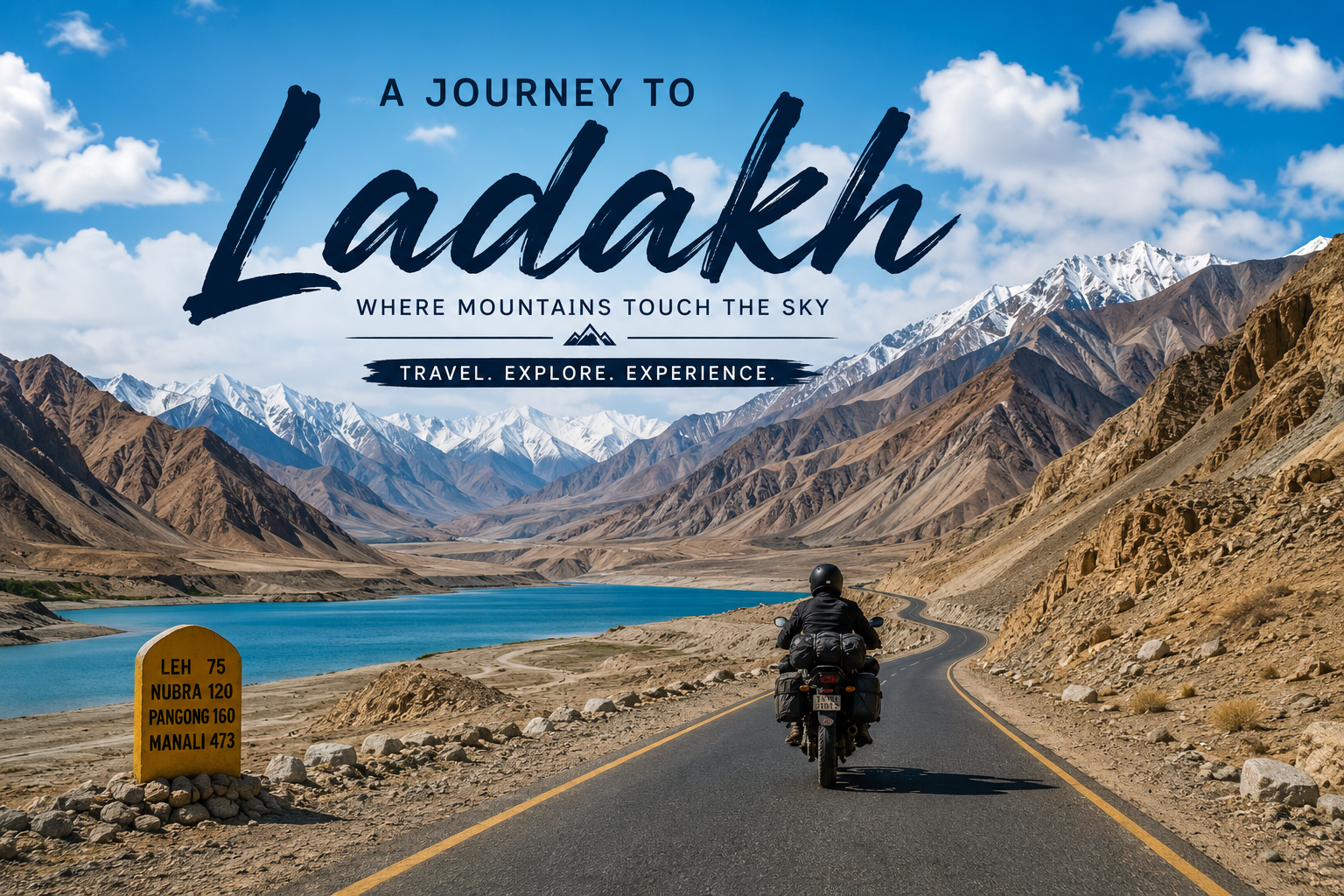
There are few places in India that capture the heart quite like Ladakh. Nestled in the northern Himalayas, this breathtaking destination is known for its dramatic mountain landscapes, crystal-clear lakes, ancient monasteries, and thrilling roads that wind through some of the world’s highest mountain passes. Whether you’re an adventure seeker, a photography enthusiast, or someone looking to escape into nature, Ladakh promises an unforgettable experience.
Planning the perfect ladakh trip
My journey began in Leh, the capital of Ladakh, where I was welcomed by crisp mountain air and spectacular views of rugged peaks stretching endlessly into the horizon. Since Leh is situated at an altitude of over 3,500 meters, I spent my first day acclimatizing, strolling through the local markets, trying traditional Ladakhi dishes, and experiencing the warm hospitality of the local people. This slow start helped me adjust to the altitude while allowing me to appreciate the peaceful atmosphere of the town.
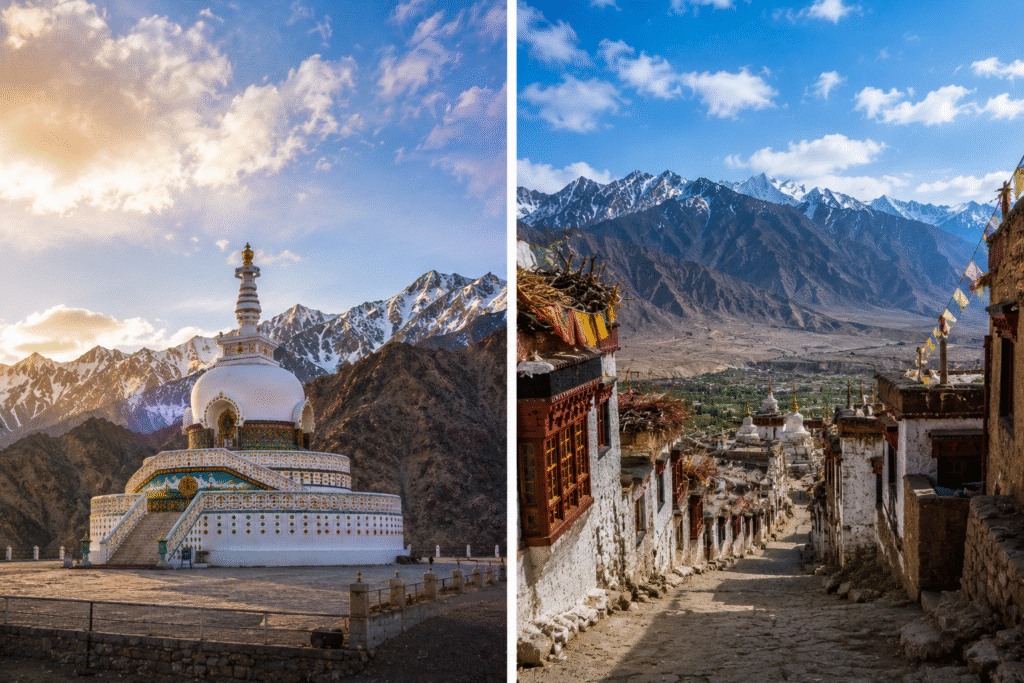
The following morning, I visited the iconic Shanti Stupa. Watching the sunrise from the hilltop was truly magical as the first rays of sunlight painted the surrounding mountains in shades of gold. I then explored the historic Leh Palace, where panoramic views of the city and the snow-capped Himalayas made every step worthwhile.
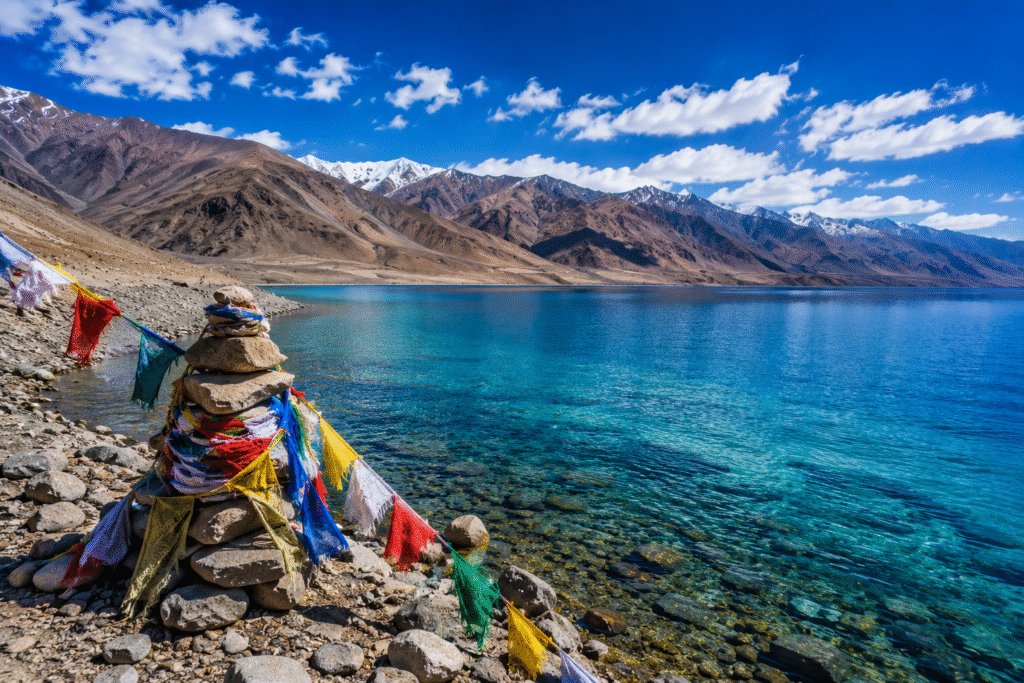
One of the highlights of my trip was the drive to Pangong Lake through the famous Chang La Pass. The journey itself was filled with breathtaking scenery, from winding mountain roads to deep valleys and picturesque villages. When Pangong Lake finally came into view, its ever-changing shades of blue looked almost unreal. Sitting by the lakeshore, surrounded by towering mountains and complete silence, was one of the most peaceful moments of my journey.
The adventure continued in Nubra Valley after crossing Khardung La, one of the highest motorable roads in the world. The valley’s unique landscape of sand dunes, green villages, and snow-covered peaks created a striking contrast. Riding a double-humped Bactrian camel at the Hunder sand dunes was a memorable experience, while a visit to Diskit Monastery offered a glimpse into Ladakh’s rich Buddhist heritage and spiritual traditions.
Ladakh is more than just beautiful landscapes. It is a place where culture and nature exist in perfect harmony. The colorful prayer flags fluttering in the mountain breeze, centuries-old monasteries, traditional villages, and friendly locals make every traveler feel connected to the region’s unique way of life. Every destination has its own story, making the journey as meaningful as the places themselves.
Budget of the trip
Planning a trip to Ladakh is relatively simple with a little preparation. The ideal time to visit is between May and September, when the weather is pleasant and the roads are accessible. A 6 to 7-day itinerary is perfect for exploring Leh, Pangong Lake, Nubra Valley, monasteries, and nearby attractions while allowing time to acclimatize. On average, travelers can expect to spend ₹30,000 to ₹50,000 per person, including flights, accommodation, meals, local transportation, permits, and sightseeing. Booking flights and hotels in advance can help reduce costs and make the trip more convenient.
As my journey came to an end, I realized that Ladakh is far more than a tourist destination. It is a place that teaches patience, inspires adventure, and reminds us of nature’s incredible beauty. Every sunrise over the mountains, every winding road, and every peaceful moment beside its lakes created memories that will stay with me forever.
If you’re searching for a destination that combines breathtaking scenery, rich culture, and unforgettable adventures, Ladakh deserves a place at the top of your travel bucket list. It isn’t just a vacation—it’s an experience that changes the way you see the world.
 Purab Patel
 mujtaba anas